
¡Bienvenidos!
Pablo Hernández Palazón – qualified coach in Winterthur
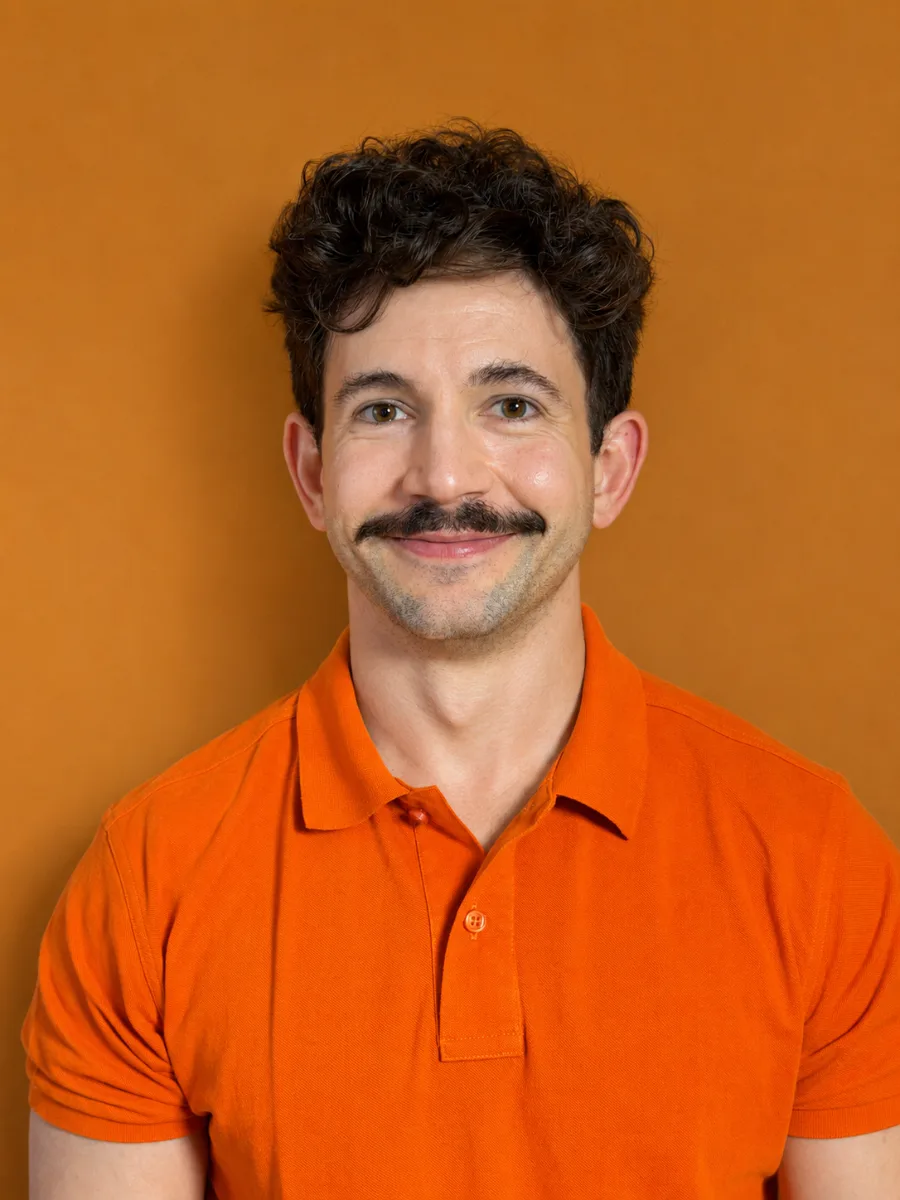
Lovely that you've found your way to this page. I'm Pablo – and yes, we can absolutely be on first-name terms, if that's fine with you!
By now you probably already know that I work as a qualified coach for neurodivergent people in Winterthur. What you may not know is that I received an ADHD diagnosis myself in early 2025 and have been engaging intensively with these topics ever since. That is what led me to focus on neurodivergence.
What I do and what matters to me
In my practice I work with people with ADHD, on the autism spectrum and with high sensitivity on gaining clarity about themselves, so that they can structure their everyday lives more clearly, regulate stress better and find their own path – in a way that feels right for each of them. I also often see parents who are at their wits' end and completely exhausted by the daily battles with their children's emotional intensity, meltdowns or tantrums.
Alongside my work as a coach, I have worked for many years as an interpreter for authorities such as the police, the courts, migration and social services. Through this profession I have often witnessed people in complex and stressful situations. It taught me not to judge, but to listen closely to each person's story so that I can quickly grasp and organise how things connect. It was also a tough school in keeping calm and a clear head, even in challenging moments.
Out of these experiences I have developed a preference for structured, resource-oriented and practical work. Theory only comes in when it can serve as a springboard for practical insight.
In this context, self-efficacy matters enormously to me: I want my clients to find their own strength and self-determination. That's why I like to give you methods and tools that you can use on your own whenever you need them, so that you gain more autonomy in your life – and can do without my services as a coach as soon as possible. (With a smile I'd say: not a great business model, but luckily I have another job too!) In the process, it is especially important to me to discover and draw on the resources you already have. Your voice is what counts in this process. I see myself as a companion who can offer fresh impulses to dissolve blockages or a sense of being at a loss.
My experience with neurodivergence
As for my personal story, I lived with undiagnosed ADHD from an early age. In early 2025 I learned through an assessment that I have ADHD, which cast many aspects of my life in a new light. Suddenly I found the right approach to many challenges whose solutions had always eluded me, however hard I tried.
After the diagnosis, however, I understood that many of these difficulties were not caused by the ADHD itself, but by the fact that for a long time I didn't know what I needed. I had adapted and, in doing so, lost sight of my own path in life. With ADHD this happens easily: you stop hearing yourself – and the less you perceive yourself, the more the demanding sides of ADHD show.
Over time I realised that an ADHD diagnosis mainly describes what doesn't work – the positive side hardly features in it. My personal task was to keep uncovering the bright side of this neurodivergence for myself: the enthusiasm, the easy linking of ideas, the curiosity, the gift for communication and the longing to stay in motion and in contact with other people. These qualities had always been with me and formed my true self, which kept fading into the background under overload and a lack of contact with myself. Many of my difficulties came from a self-image shaped by decades of misunderstandings – other people's and my own – not from an unchangeable neurological disposition. For me, this doesn't mean that the disposition isn't there – it is often very noticeable – but that it doesn't necessarily have to end in exhaustion.
With this realisation, I could see that the disorder the “D” in ADHD stands for could become a great strength. It is called a disorder because people usually only receive the diagnosis once major difficulties have appeared at school, at work or at home. A fulfilling life with these traits is, however, entirely possible.
So I decided to follow one of my dreams and enrolled in a master's degree in creative writing. Recently I have also started studying art alongside my work – my second childhood dream – and I am completely absorbed in this form of self-expression.
I also completed a DAS (Diploma of Advanced Studies) in “Coaching und Beratung für Neurodivergenz” (Coaching and Counselling for Neurodivergence) at the Praxis für Lösungsimpulse, focusing on ADHD, the autism spectrum and high sensitivity. I felt the wish to pass on my own experience to help others who have been struggling with similar problems, whether for a short or a long time.
In other words, I want to share what helped me on my way, be it techniques, models or simply listening and understanding what is there right now. I want to help the people who come to my practice find their own unique path, with everything I have at my disposal professionally. Because I believe that a neurodivergence diagnosis is the beginning of a journey that can lead to greater self-knowledge and therefore to a more fulfilling life. And I believe it is possible to approach these processes lightly and playfully, even when painful topics sometimes come up.
Because I want to pass on to my clients what helped me myself, I like to attend training and further education courses. In 2026 I completed the SMART stress management programme at Harvard Medical School and the first module of the EMI® training (Eye Movement Integration) at the IBP; since then I have been using EMI for persistent blockages. In November 2026 I will complete my training as a coach in Intuitive Trauma-Heilung (intuitive trauma healing, ITH), and in April 2027 the INPP® training, which deals with early childhood reflex patterns and how they affect concentration, movement and regulation. In November 2026 I will also start training in Resource Therapy – a method for reaching and integrating parts of the personality gently and quickly. You'll find every step in the list below.
One more word about my experience with neurodivergence: around the time I received my diagnosis, I accompanied several diagnostic processes for ADHD and the autism spectrum as an outside person in my close circle. From this perspective of an outsider who is nonetheless affected, I also have a sense of how the people close to someone feel when that person receives such a diagnosis. I have seen at first hand how hard it can be for those around them to accept the consequences of the diagnosis. This very bridge between being directly and indirectly affected is of great value to me in coaching, as people who live with someone recently diagnosed as neurodivergent often come to my practice.